
From Good to Great: Solutions Worth the Buy in the Build Era
Three signs a construction tech solution will outlast the demo.

This article is a paid partnership with Kantiv. All perspectives and opinions are my own.
Over my career in construction technology, I have sat through hundreds of demos. Many were bad. Some were good. Only a handful ever made me think – I wish I had this years ago – and that ratio has always struck me as the real story of our industry's technology problem.
Most startups fail, and it is not always because of funding. In construction, I would put it more simply: most solutions just aren't that good. They solve a problem that sounds right in a pitch deck, but fall apart the moment it meets how the industry actually works.
This gap is also extremely easy to hide right now. In an era where the next shiny thing can be vibe coded up if you have enough AI credits to your name, the barrier to building something that looks valuable is virtually nonexistent.
So how can you tell what is worth investing in?
Fortunately, the nature of our work – complex, physical, high-stakes, to name a few aspects – answers this question eventually. However, "eventually" tends to arrive too late. What we need are signals we can look for at the demo, before purchasing.
I keep coming back to one place this shows up, which is proposals. However, the real problem sitting underneath is bigger than any one workflow. It is whether a firm's knowledge – who did what, for whom, and how it went – exists anywhere it can actually be used. Proposals just happen to be where that gap gets exposed first, between the experts out on the jobsites and the people who have to tell their stories. Closing this gap is crucial for the industry to function, and for businesses to win work.
A brief note on build vs. buy: that conversation is interesting and increasingly important, but this article is specifically about the buy side – companies lacking robust internal development capabilities, builders avoiding managing and maintaining software, and anywhere a clear problem-solution alignment is surfaced.
So, with that in mind, here are three characteristics I have noticed in the solutions that truly drive value – from demo through deployment and beyond.
- The Problem is Personal
The technology vendor knows where the pain actually is, and where the time savings really need to go, because they have lived it themselves. You should not have to explain your own problem to your provider. When a tech team opens by describing your worst day back to you, in more detail than you would have volunteered, pay attention.
With proposals, one of the most daunting tasks is digesting a large RFP and just getting the ball rolling on where to start. The document sits in an inbox or downloads folder, it is two hundred pages, the deadline is aggressive, and before a single word gets written somebody has to read all of it, pull every requirement, hunt down which past projects are even remotely relevant, and work out who inside the firm is getting conscripted into helping.
It is genuinely overwhelming for a pursuit team to orchestrate all the parts and pieces, and is just the first step of getting started.
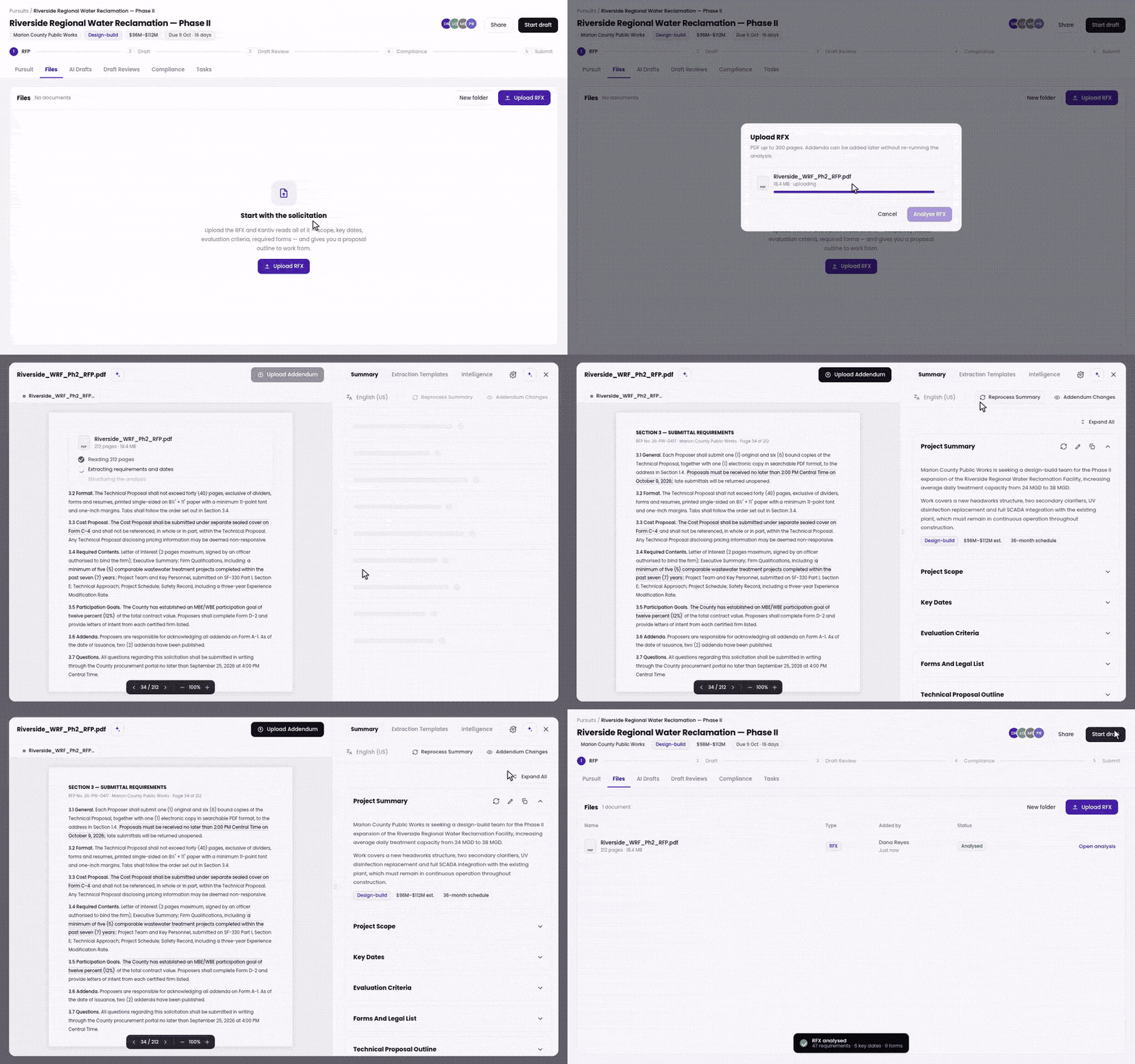
This is exactly where Kantiv aimed. Their team reports two to four hours saved per day per person just getting started on an incoming RFP, and working drafts moving from anywhere between three days and two weeks down to roughly one.
The speed comes from what's underneath: an intelligence layer that already knows the firm's people, projects, and history, so a new RFP gets matched against real precedent instead of starting from scratch each time. That connected “brain” is a real differentiator – most AI tools can read a document fast, but few strategically pull relevant data from a company’s history.
Treat any vendor's figures with the usual caution, but notice where the savings land. Not at the polishing stage, but at the front, in the messy coordination and orchestration phase, which is the part every proposal professional I know would happily never do again.
- The People are the Process
Great solutions function beyond just the process they are addressing. They take into consideration how people in construction realistically work and connect.
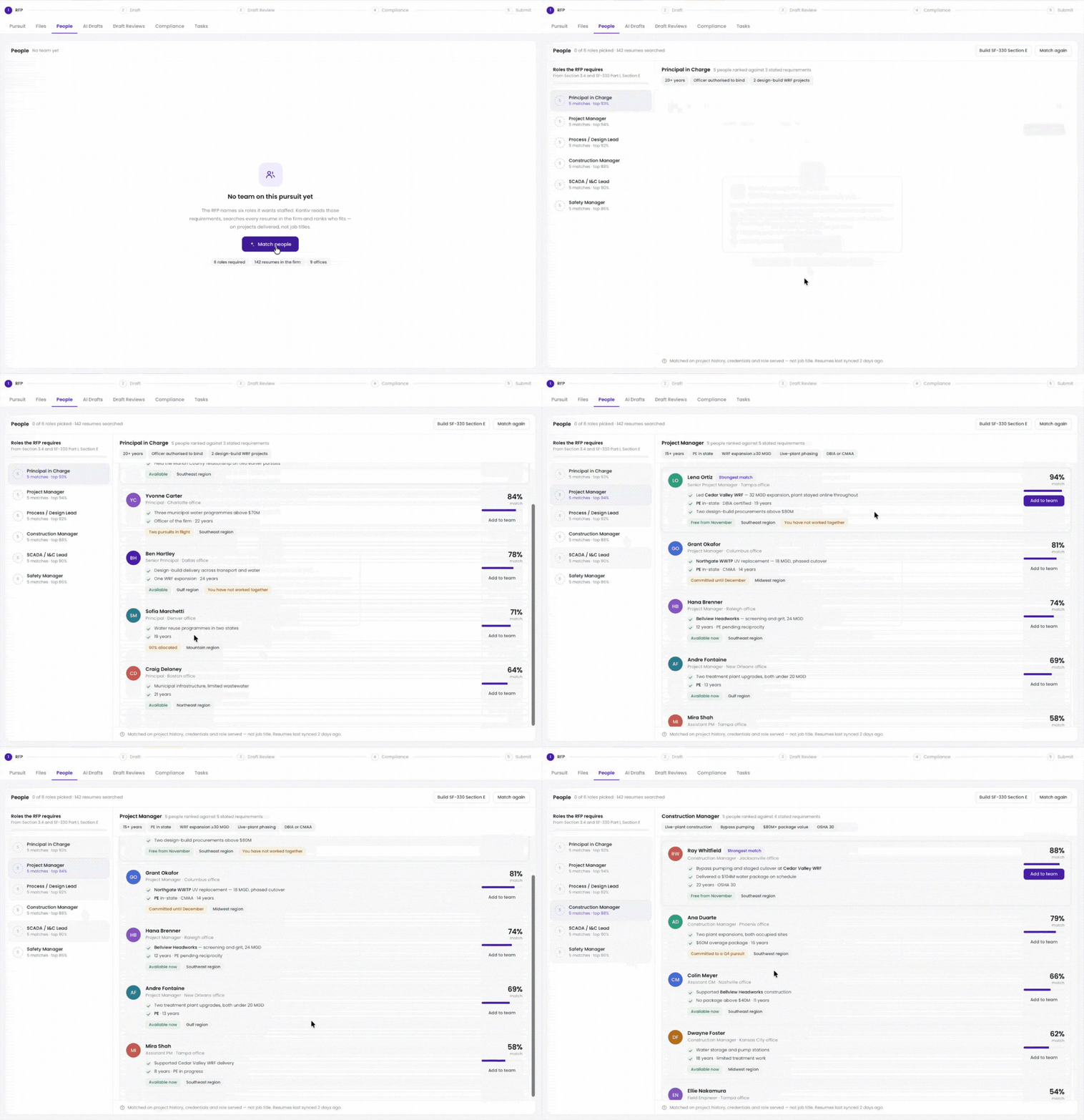
This is where that earlier silo gets closed. If someone three regions away has run your exact project type for your latest RFP, you can find them and get the information easily, rather than dropping a desperate message into a regional Teams channel on a Friday afternoon.
That same connected brain is what makes this possible: it doesn't just hold resumes, it knows how people, projects, and clients relate to each other, which sounds administrative until you consider the result. The most qualified person in your firm becomes visible to the pursuit lead, whether or not those two have ever met.
Better teams are put forward, and connection is established between people who build the work and the people who win it.
The way we work matters as well. In the age of the AI chatbot, it is easy to say, "there's an AI for that," but not everyone knows how to use them safely and effectively. While some early adopters can be excellent at prompting, most people are not.
A central platform standardizes and scales the AI usage experience to some degree, namely establishing a clear baseline of technical skills and readiness. In practice, this means the least confident contributor still produces something that looks like your firm's work, without requiring hours of new training and education.
Very few construction companies have a real plan for developing the prompt-project engineer hybrids who are becoming our future workforce. A platform that makes the skill more easily acquirable is doing organizational work, not just saving time.
- Growth and Evolution are in their DNA
If it's too good to be true, then it's too good to be true! No solution is perfect, and it is a red flag when one claims to cover every bell and whistle imaginable – you are buying a solution with a specific purpose, not a magic wand. A vendor who will not name a single limitation is either not paying attention to their own product, or is counting on you not to.
The inverse is one of the best signals a buyer gets. Kantiv was straightforward on several fronts: there is no persistent memory yet, resumes are not currently automatically updated, and Kantiv Agents are in beta with an anticipated launch in early October.
None of those are dealbreakers for me, but instead demonstrate a thoughtful and strategic product roadmap that is dynamic yet grounded enough to anticipate future needs. I’m most excited to see the soon-to-launch resume updates at closeout – because who even remembers to update that once the job is done?
That's the other thing worth watching for: whether a roadmap is being pointed at your actual pain points, and how well the company listens to your feedback. No software company can fix everything at once, but what matters is whether the things on their development list are the things that matter to you, and whether progress against them is visible over time.
What I am looking for is not a perfect product. It is a team whose answer to "what doesn't it do yet" is immediate and specific rather than evasive. That answer tells you what the next two years of the relationship are going to feel like.
What You Are Actually Buying
Good solutions save you time. Great ones understand why the time was being lost in the first place.
Notice that all three signals are about people, and about what people like that end up building. Have they lived your problem? Do they design for how humans actually work, instead of how a process diagram says they do? And can they tell you honestly what they haven't built yet, and what’s coming next?
None of that shows up on a comparison matrix, and all of it determines whether the solution is still in use years down the line.
The build era hasn't changed this part: software keeps getting easier to make, but the judgment about which features are worth building doesn't get any cheaper. Judgment still comes from people who have stood in the room at 6pm the night before a submission. That's what you're actually buying.
Buy the team. The software comes with it.
Curious what this looks like in practice? Book a demo with Kantiv.
Sources
-
Kantiv. https://www.kantiv.com/
-
Kantiv product demonstration and follow-up discussion, August 14, 2026. Time-savings figures cited are as reported by Kantiv.